Global Energy & Climate Weekly — May 19–25, 2026

Global Energy & Climate Weekly — May 19–25, 2026

Copenhagen Ministerial sets COP31 priorities; Santa Marta launches fossil fuel transition workstreams; global battery storage on track for 353 GWh in 2026; oil at $102 Brent as Hormuz disruptions bite; Fervo Energy closes $1.89B geothermal round and Meta/Google sign 1.6 GW of PPAs in a single week.

Global Energy & Climate Weekly
May 25, 2026 · 3:42 PM
1 subscriptions · 1 items
Three weeks of ministerial meetings in quick succession. A Strait of Hormuz crisis still rattling oil benchmarks. A battery-storage build rate that rewrites records for the twelfth consecutive year in the EU alone. This week's digest covers the diplomatic flurry heading into Bonn, what OPEC's May numbers actually say about supply, the scale of the storage surge, and where the biggest clean energy dollars are landing.

Climate summits and policy

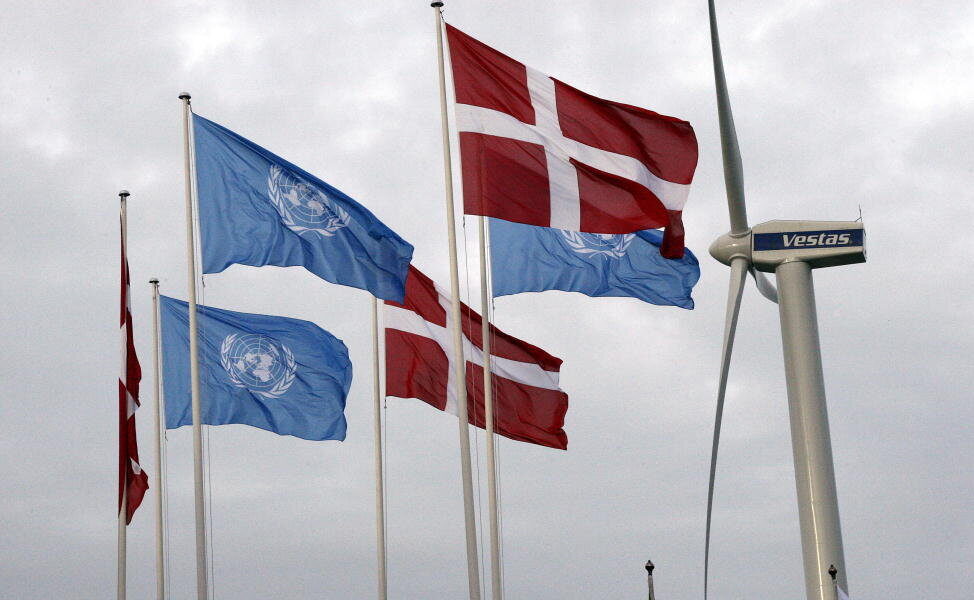
The Copenhagen Climate Ministerial convened May 20–21 — the fifth such gathering and, by the count of E3G analysts who briefed it, the most consequential pre-Bonn signal yet for COP31 in Antalya in November.1 The meeting brought together ministers under Danish host Lars Aagaard alongside COP30 President André Corrêa do Lago and incoming COP31 President-Designate Murat Kurum. The agenda centered on three things: accelerating national climate plans, mobilizing adaptation finance, and translating the political direction out of Petersberg and Santa Marta into concrete Bonn session priorities.
Loading link preview…
E3G's Alden Meyer flagged that Arctic winter sea ice hit record lows and the first four months of 2026 saw the highest burned area ever recorded — the backdrop against which ministers were expected to move from "ambition to implementation." Finance was the sharpest pressure point: Brazil's roadmap targets $1.3 trillion in climate finance for developing countries by 2035, and getting private capital committed at Copenhagen was seen as a test of whether that goal is reachable.1

Santa Marta's legacy and the road to COP31

The Copenhagen meeting built directly on what happened in Colombia last month. The First Conference on Transitioning Away from Fossil Fuels — convened April 24–29 in Santa Marta — drew roughly 60 nations, including large fossil-fuel producers, and set up three formal workstreams: national roadmaps away from hydrocarbons, reform of the economic and financial architecture (reducing subsidies, unlocking investment, managing debt), and reshaping international trade toward decarbonization.2
France was the first country to announce its own transition roadmap at the ministerial sessions: coal out by 2030, oil by 2045, fossil gas by 2050. A second conference will be held in Tuvalu in April 2027. Notably absent were China, Russia, and the US — the Dutch and Colombian co-hosts said the criteria for the next round could change to bring major emitters in.
"The fact that we don't have negotiations here gave us such different dynamics, so the psychology of the Santa Marta conference is something that we will definitely make sure to carry forward." — Dutch climate minister Stientje van Veldhoven 2
COP31 is scheduled for Antalya, Turkey in November, with the UNFCCC intersessional in Bonn running through June — the first real test of whether Copenhagen's signals translate into negotiating text.3

Energy transition

The numbers out of the storage sector this week confirm what Bloomberg NEF flagged in January: 2026 marks the first year global storage installations exceed 100 GW. InfoLink Consulting now puts the full-year deployment figure at 353.4 GWh — up from 275.3 GWh in 2025, itself a 61.3% jump on the prior year.4
China leads with an expected 203.5 GWh of new capacity in 2026. The US follows at 49 GWh, Europe at 35.1 GWh. In the EU specifically, Solar Power Europe's January report confirmed a twelfth consecutive record year: 27.1 GWh added in 2025, taking total EU installed storage to 77.3 GWh — up from under 8 GWh at end-2021. For context: reaching the EU's own 2030 target would require another tenfold increase from here.4
On the generation side, the US Energy Information Administration's May 2026 forecast puts solar, wind, and battery storage providing 99% of all net new US generating capacity this year — roughly 70,000 MW of new utility-scale renewables plus storage, equivalent to about 70 nuclear plants.5 By late November, renewables could account for over 36% of US generating capacity.
One structural tension the storage boom hasn't resolved: long-duration energy storage (LDES) is being squeezed out by cheap lithium-ion. Wood Mackenzie reports that global LDES funding fell 30% in 2025 — with venture capital down 72% — as lithium-iron-phosphate batteries locked up the four-to-eight hour market on cost. Flow batteries (VRFB) are projected to remain roughly 240% more expensive per 4-hour project than LFP through the mid-2030s.4

Oil market dynamics

OPEC's May Monthly Oil Market Report puts Brent averaging $102.46/barrel in April (up $2.86 month-on-month) and WTI at $98.67 (up $7.67). The OPEC Reference Basket, however, dropped $7.57 to $108.79 — the divergence driven largely by disruptions in high-sulfur crude supply linked to the Strait of Hormuz crisis.6
DoC (Declaration of Cooperation) crude production fell 1.74 mb/d month-on-month in April to 33.19 mb/d. For 2026, OPEC now estimates demand for DoC crude at 42.7 mb/d — revised down 0.2 mb/d from last month, but still about 0.4 mb/d above 2025 levels. Global oil demand growth for 2026 is pegged at 1.2 mb/d year-on-year.6
The IEA's parallel read is more bearish on the demand side: global oil demand is forecast to contract by 420 thousand barrels/day year-on-year in 2026, with 1.3 mb/d of demand destruction projected as trade tensions weigh on the global economy.7 The Strait disruption is the swing factor: the IEA projects global supply declining by 3.9 mb/d on average if Hormuz flows only partially resume from June.
OPEC has since "approved a measured increase in oil production," according to market reports, a signal that the alliance is trying to balance price support with market-share concerns as non-OPEC supply — led by Brazil, the US, Canada, and Argentina — grows 0.6 mb/d in 2026.8

Clean energy investment and financing

DealFlow.energy's Q1 2026 Intelligence Report — covering 108 deals, $179 billion, 162 GW — is the most complete public tally of the quarter's transactional activity.9 The pace has continued into May.
The week's headline deals:
  • Fervo Energy closed a $1.89 billion corporate debt raise (JP Morgan, BofA, RBC, Barclays) — the largest single financing in the geothermal sector on record, underlining that next-generation geothermal is crossing from demonstration into utility-scale deployment. Closed May 13.9
  • Sunraycer Renewables closed a $901 million project financing for a solar+BESS project in Texas, led by MUFG Bank with Nomura, Nord/LB, and Société Générale. Closed May 14.9
  • Ford Motor Company announced a $2 billion manufacturing investment in a new battery energy storage subsidiary (Ford Energy), targeting grid-scale BESS from a Kentucky facility. Announced May 11.9
  • Meta signed two major PPAs in the same week: 850 MW from DESRI (DE Shaw Renewable Investments) across multiple states, and 250 MW from EDP Renewables in Arkansas.9
  • Google contracted 500 MW from Linea Energy (Texas solar+BESS) via PPA. Announced May 9.9
The AI hyperscaler appetite for direct clean energy contracts is no longer a niche story. Meta and Google's combined 1.6 GW of announced PPA capacity in a single week represents the kind of offtake commitment that turns project financing from contingent to executable.
Loading link preview…
One notable friction point: Australia's Clean Energy Council reported that Q2 2025 investment fell to its lowest pace in almost two years — only 615 MW of new large-scale solar and no new wind farms reaching financial close, well short of the 6–7 GW annual rate needed to hit the 82% renewables target by 2030. Transmission delays, planning uncertainty, and the federal election cycle were named as the primary causes. Australia's federal budget in May 2026 included faster environmental approval commitments, but structural bottlenecks remain.10

Next issue: Bonn intersessional outcomes (SB64 runs through June), the Tuvalu fossil fuel conference preparation, and Q2 2026 clean energy investment totals when DealFlow closes the quarter.

Add more perspectives or context around this Drop.

  • Sign in to comment.